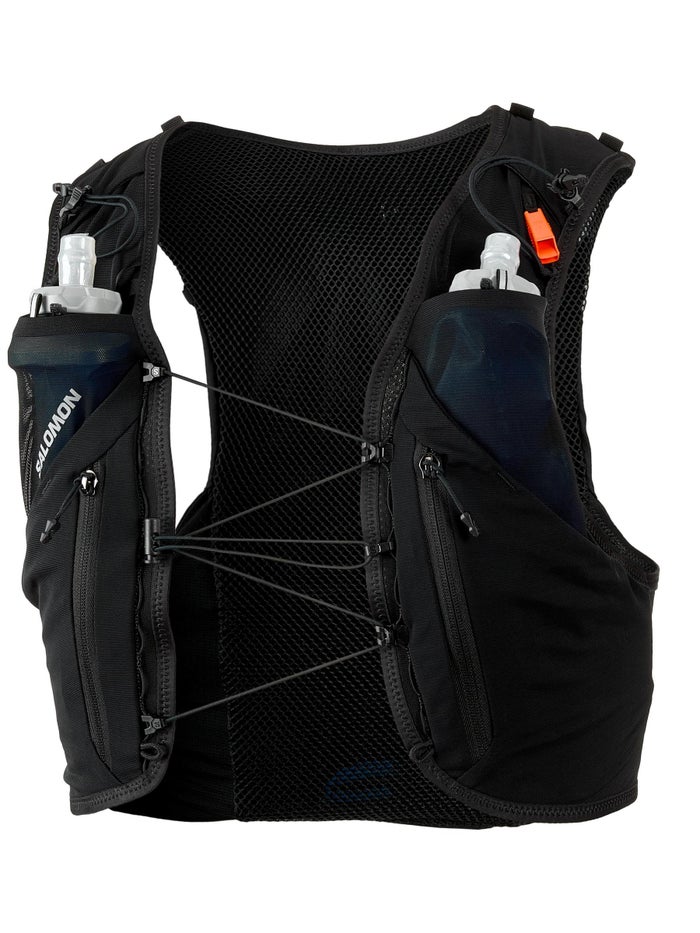
Key takeaways
- Plan your fuel by hours, not kilometres: trails are slow, so a 15 km run can take 2 hours or more.
- Under an hour you need nothing; from 1 hour, aim for 30–60 g of carbohydrates per hour; past 2–3 hours, up to 60–90 g if your stomach is trained.
- Start eating at 30–45 minutes and keep going little and often: by the time you feel empty, it is late.
- Drink to thirst and add salt in long or hot runs. Drinking far more than you sweat is risky too.
- Your stomach can be trained: practise on every long run, and never try anything new on race day.
01Why you hit the wall
Your muscles burn a mix of fat and carbohydrates. Fat is almost unlimited, but carbohydrates, stored as glycogen in your muscles and liver, run low after roughly 90 minutes to 2 hours of steady running. When they do, everything gets harder: heavy legs, slower pace, bad mood. That is the wall, and on trails it usually arrives around 15 km or 2 hours.
Eating during the run tops up those stores before they run out. It is not about willpower: it is the difference between finishing strong and walking the last hour.
02How much, by how long you run
| Time out | Carbohydrates | Fluid | Salt |
|---|---|---|---|
| Under 1 hour | None needed | Only if it is hot | None |
| 1–2 hours | 30–60 g per hour | To thirst, about 400–600 ml per hour | Only in heat |
| 2–4 hours | 60 g per hour, more if trained | To thirst, about 400–800 ml per hour | Electrolyte drink or salt capsules, especially in heat |
| Over 4 hours | 60–90 g per hour, if your stomach is trained | To thirst, more in heat | Regularly, from the start |
03What 30–60 grams looks like
| Food | Carbohydrates |
|---|---|
| Maurten Gel 100 (40 g) | 25 g |
| Naak Boost gel | 30 g |
| 226ERS High Energy gel (76 g) | 50 g |
| Maurten Drink Mix 320, in 500 ml | 78 g |
| A medium banana | About 25 g |
| Two Medjool dates | About 35 g |
| 500 ml of a typical sports drink | About 30 g |
Gels and drinks to compare
Gels and drinks
- Fast to digest and easy to dose: you know exactly what you take.
- Best when the effort is high or the run is long.
Real food
- Bananas, dates, boiled potatoes, rice bars: cheaper and kinder on some stomachs.
- Works best at easier efforts and on long, slow days.
04Before the run
- 1
The day before a long run
Normal meals with a bit more carbohydrate (rice, pasta, bread, potatoes). No need for a giant pasta dinner.
- 2
2–3 hours before
A carb-based breakfast that is low in fibre and fat: oats, toast with honey, rice. Fat and fibre slow digestion and upset stomachs.
- 3
30–60 minutes before
A small snack if you are hungry: a banana or a few biscuits, and a glass of water.
05During the run
- 1
Start early
Take your first carbohydrates at 30–45 minutes, before you feel you need them.
- 2
Little and often
Something every 20–30 minutes digests better than a lot at once. A timer on your watch helps.
- 3
Take gels with water
A few sips of water with each gel helps it go down and be absorbed.
- 4
Use caffeine late, if at all
A caffeinated gel can help in the second half of a long run. Test it in training: some stomachs don't like it, and it can stop you sleeping after an evening race.
| Time | What |
|---|---|
| 0:40 | Gel (25 g) with water |
| 1:10 | Half a banana and a few sips of electrolyte drink |
| 1:40 | Gel (25 g) with water |
| 2:10 | Two dates or a rice bar |
| 2:40 | Gel, caffeinated if you tolerate it |
06Drinking and salt
For most runners, drinking to thirst works well. What you need depends on heat and on how much you sweat, which varies a lot between people.
When to add salt
- Runs over 2 hours, hot days, or if you see white salt marks on your clothes.
- Use an electrolyte drink, salt capsules or salty food.
Don't overdrink
- Drinking much more than you sweat dilutes the salt in your blood, which can be dangerous.
- Gaining weight during a long run is a sign you are drinking too much.
07Train your stomach
Stomach problems are one of the main reasons long trail runs and ultras go wrong, and the gut adapts with practice like your legs do.
- 1
Start at 30 g per hour
On every run over an hour, even when you don't feel you need it.
- 2
Add about 10 g per hour every 1–2 weeks
Until you reach what you plan for race day.
- 3
Practise with your race products
The same gels, drinks and timing, at the effort you will race at.
- 4
Write it down
What you ate, when, and how your stomach felt. Patterns show up fast.
08How to carry it
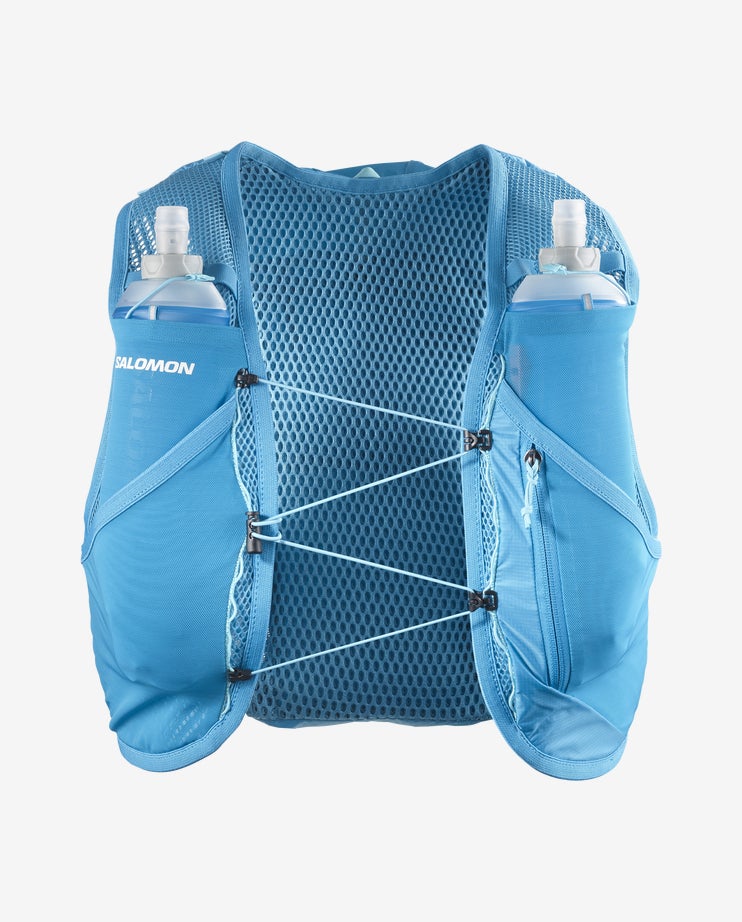
From about an hour, a running vest is the most comfortable way to carry water, food and a jacket: soft flasks at the front, food in the side pockets where you can reach it without stopping.
09After the run
Within an hour or two
- Carbohydrates to refill your stores, plus about 20–30 g of protein for your muscles.
- A normal meal does the job: rice with eggs, a sandwich, yogurt with fruit and oats.
Rehydrate
- Drink until your urine is pale again.
- After long or hot runs, add some salt: a salty meal or an electrolyte drink.
Frequently asked questions
How many gels do I need for a trail half marathon?
It depends on how long you will be out. For a 2.5–3 hour race at 40–60 g of carbohydrates per hour, that is about 4–6 gels of 25 g, or fewer if you also drink an energy drink.
Are gels better than real food?
Neither is better for everyone. Gels are quick and easy to dose; real food is cheaper and some stomachs prefer it on long, slow runs. Many runners mix both.
Do I need to eat on a 1-hour run?
No. Your glycogen stores cover an hour of running. Water is only needed if it is hot.
Does salt prevent cramps?
Not reliably. Cramps are mostly linked to fatigue and to running harder or longer than you trained for. Salt matters for long or hot runs, but training is the best prevention.
Why does my stomach hurt when I eat while running?
Usually too much at once, too much fat or fibre before the run, a product you are not used to, or a gut that is not trained yet. Start with smaller amounts more often and build up.